F1 Motors sells pre-owned luxury cars in Vadodara. The stock changes constantly, the buying decision is emotional, and the finance question comes up before anyone picks up the phone. A site for a dealer like this has to handle all three.
Concept project. A self-initiated redesign, made to show how this studio approaches a showroom business. F1 Motors did not commission it and the site described here was never deployed for them.
- Subject
- F1 Motors, Vadodara
- Scope
- Six-page site, admin panel
- Role
- Self-initiated — design and build
- Status
- Concept — not commissioned
The premise
Every competing dealer site in the region was the same thing: a grid of thumbnails, a phone number, and a contact form nobody fills in. The cars themselves were the most persuasive asset in the business and none of it reached the screen.
So the problem I set myself was a site that felt closer to the showroom than to a listings page — while staying something a small team could run themselves, without calling a developer every time a car sold.
The build
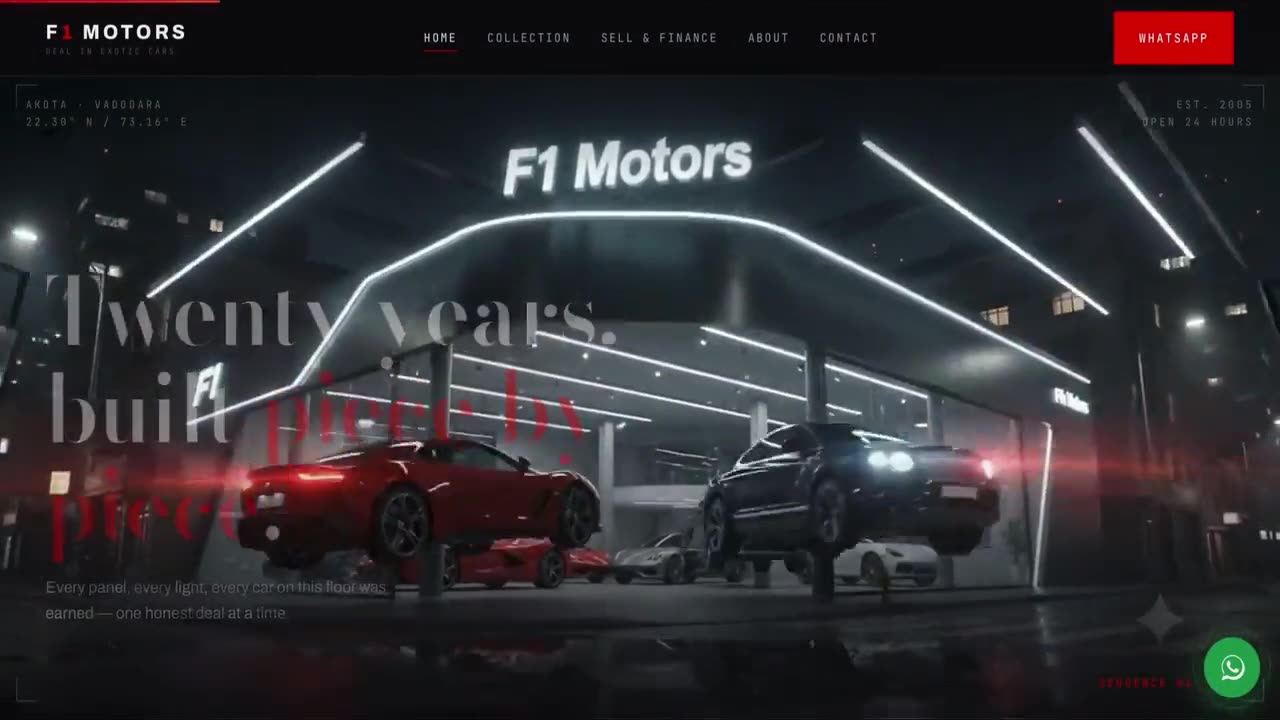
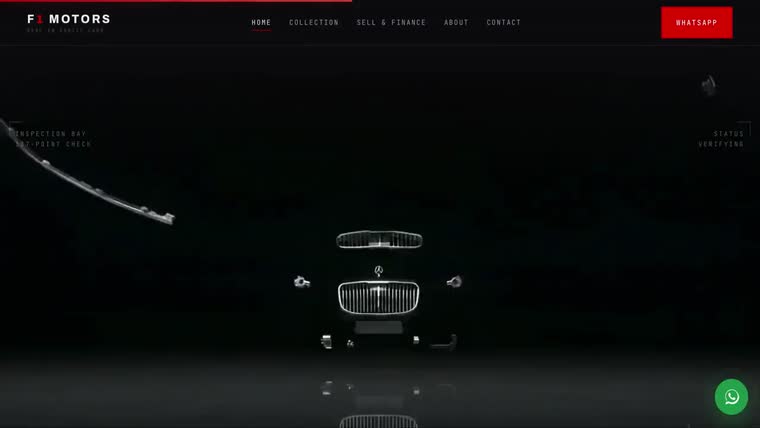
The homepage is built around a scroll-scrubbed video sequence. Rather than autoplaying a showreel, the footage is tied frame-by-frame to scroll position — the visitor controls the pace through the collection, and the camera move stops exactly where they stop.
That choice does real work beyond looking good: it removes the decision to press play, and it makes the browsing motion itself feel like the car is being presented.
The detail
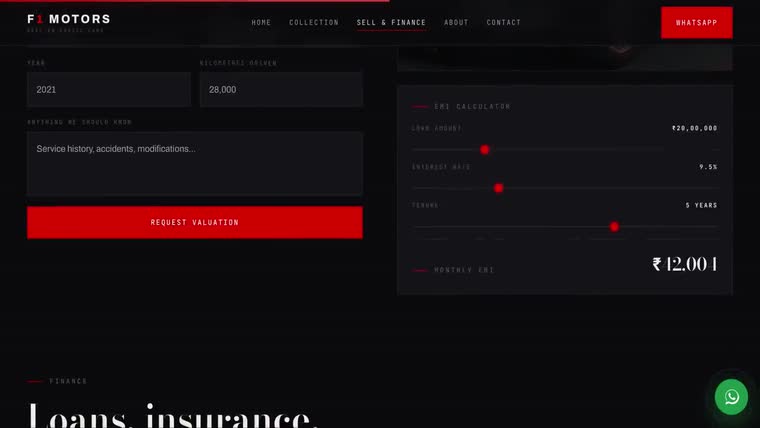
- Live EMI calculator. Finance is the first real question a buyer has. Putting the monthly figure on the same screen as the car answers it before it becomes a reason to leave.
- Stock admin panel. Designed so the team would add, edit and retire listings themselves — no developer in the loop, no stale inventory sitting live after a sale.
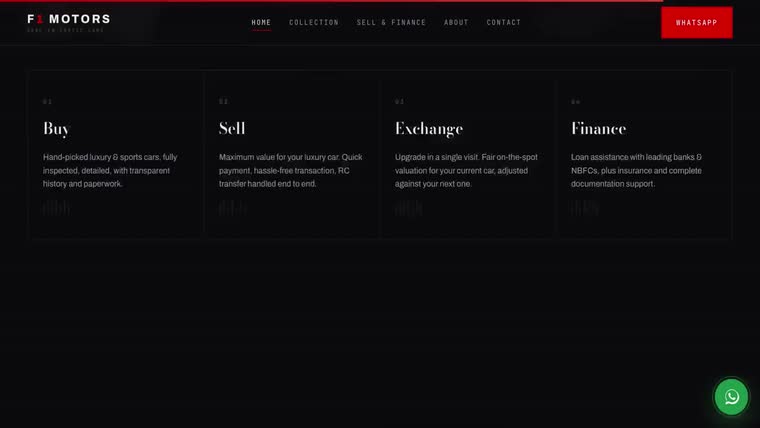
- Six pages, one shot. Collection, individual vehicle, finance, about, contact and admin — each built to feel like a continuation of the same sequence rather than a separate destination.
What it shows
A complete six-page concept, designed so a dealership could run it without us. The cinematic treatment carries the emotional half of the sale; the calculator and the admin panel carry the practical half.
It is the clearest example of what the studio argues for: motion that is doing a job, sitting on top of software that a real business runs its day on.